Cost to Complete (CTC): The Most Important Commercial Number in Construction
Published: July 2026
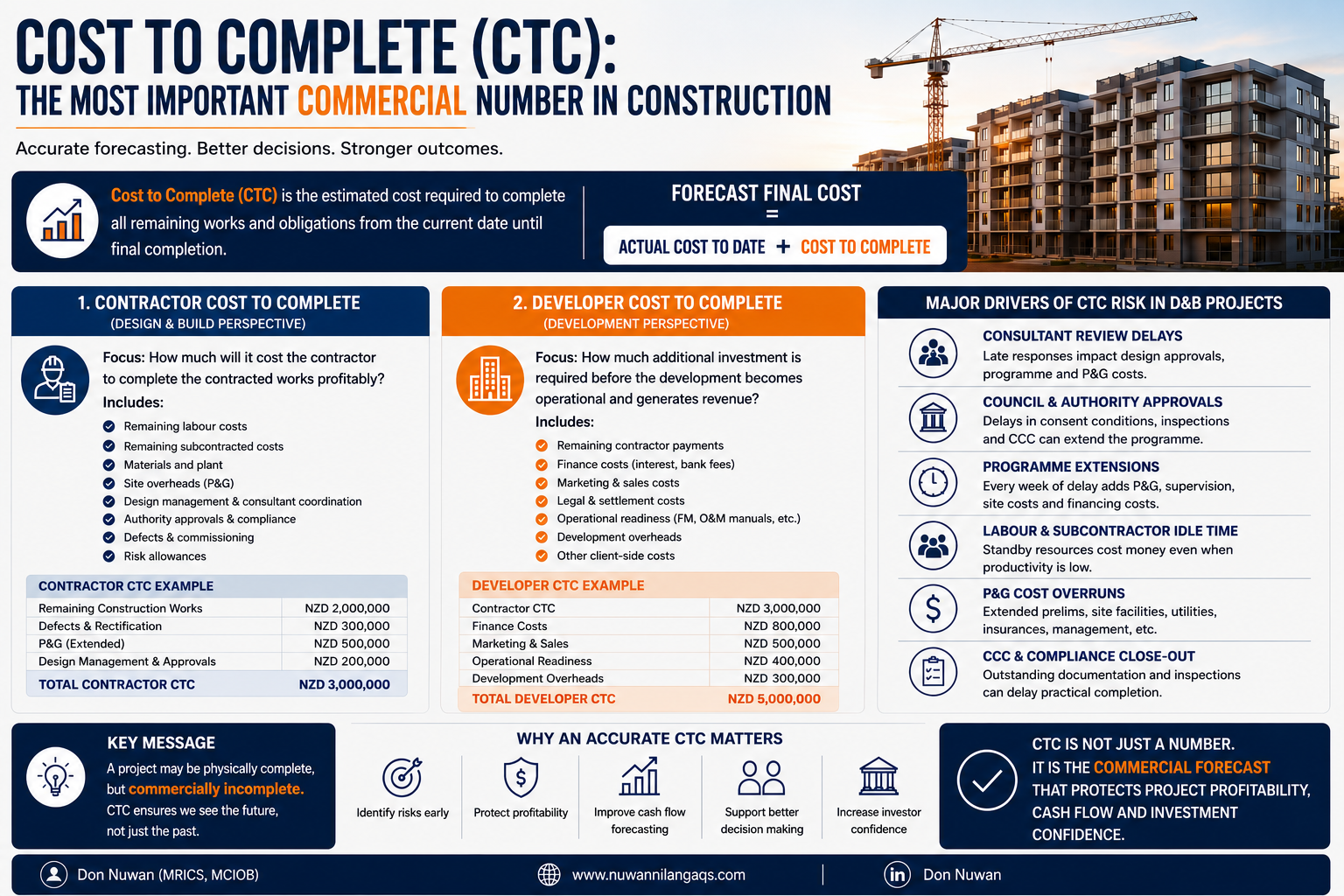
Why does Cost to Complete matter more than budget tracking? This article explains why CTC is the most important commercial number in construction, how contractor and developer CTC forecasts differ, why it becomes critical in Design & Build projects, and how a project can be physically complete but commercially incomplete.
Estimators, Quantity Surveyors, Commercial Managers and AI: Why Experience Still Matters in Construction
Published: June 2026
Artificial Intelligence is transforming the construction industry, but will it replace Estimators, Quantity Surveyors, and Commercial Managers? This article explores how AI is changing commercial construction roles, why practical construction experience remains invaluable, and how successful professionals will combine technology, commercial judgement, leadership, and industry knowledge to deliver better project outcomes.
Retention Money in Construction Contracts: FIDIC 1999 and NZS 3916 Explained
Published: May 2026
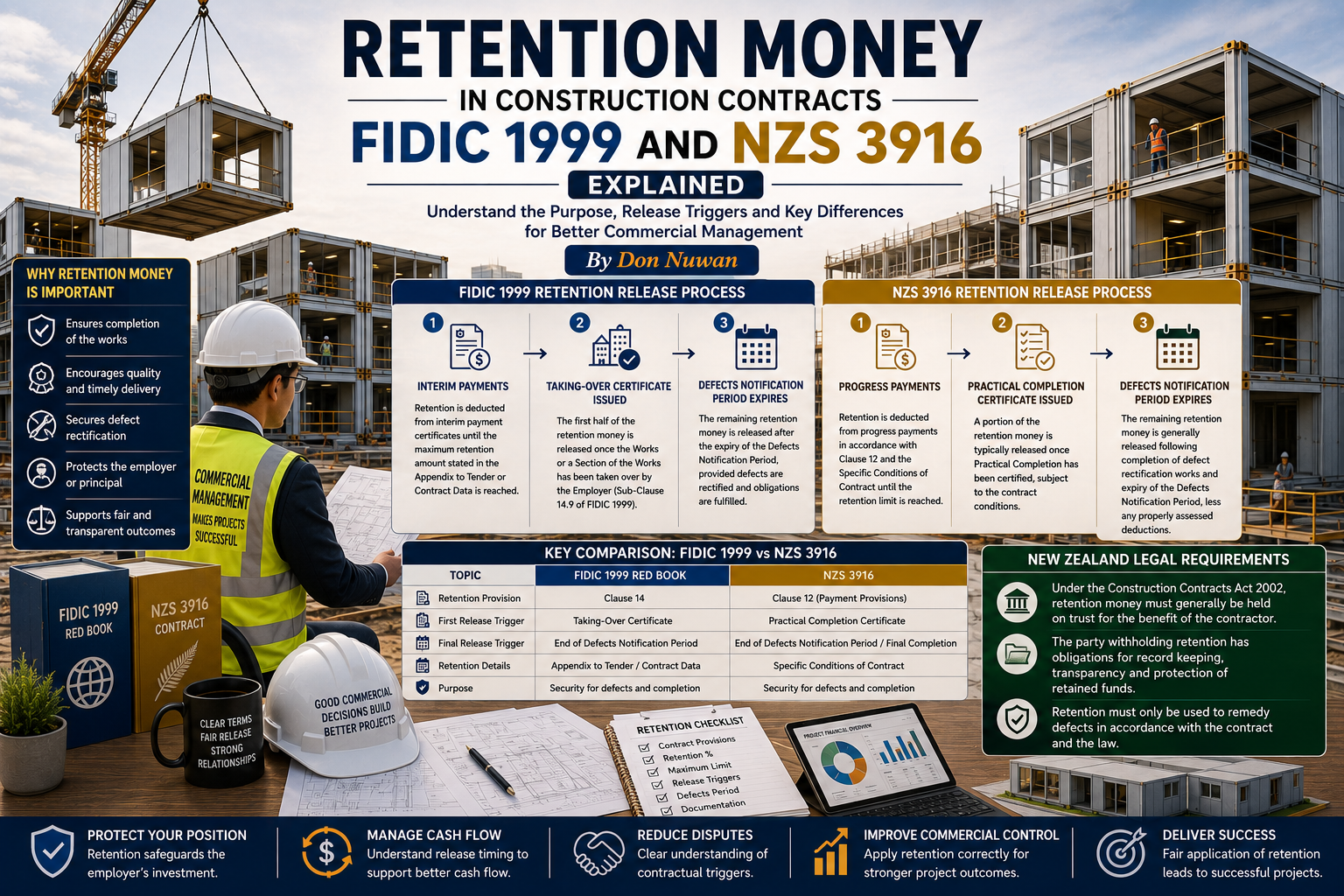
Retention money is one of the most important commercial mechanisms in construction contracts, yet it is often misunderstood. This article explains the purpose of retention money, compares the key retention provisions under FIDIC 1999 and NZS 3916, and examines release triggers, New Zealand legal requirements, and practical considerations for Quantity Surveyors, Contract Administrators, and Project Managers.
How ERP Systems Are Transforming the Role of the Quantity Surveyor
Published: April 2026
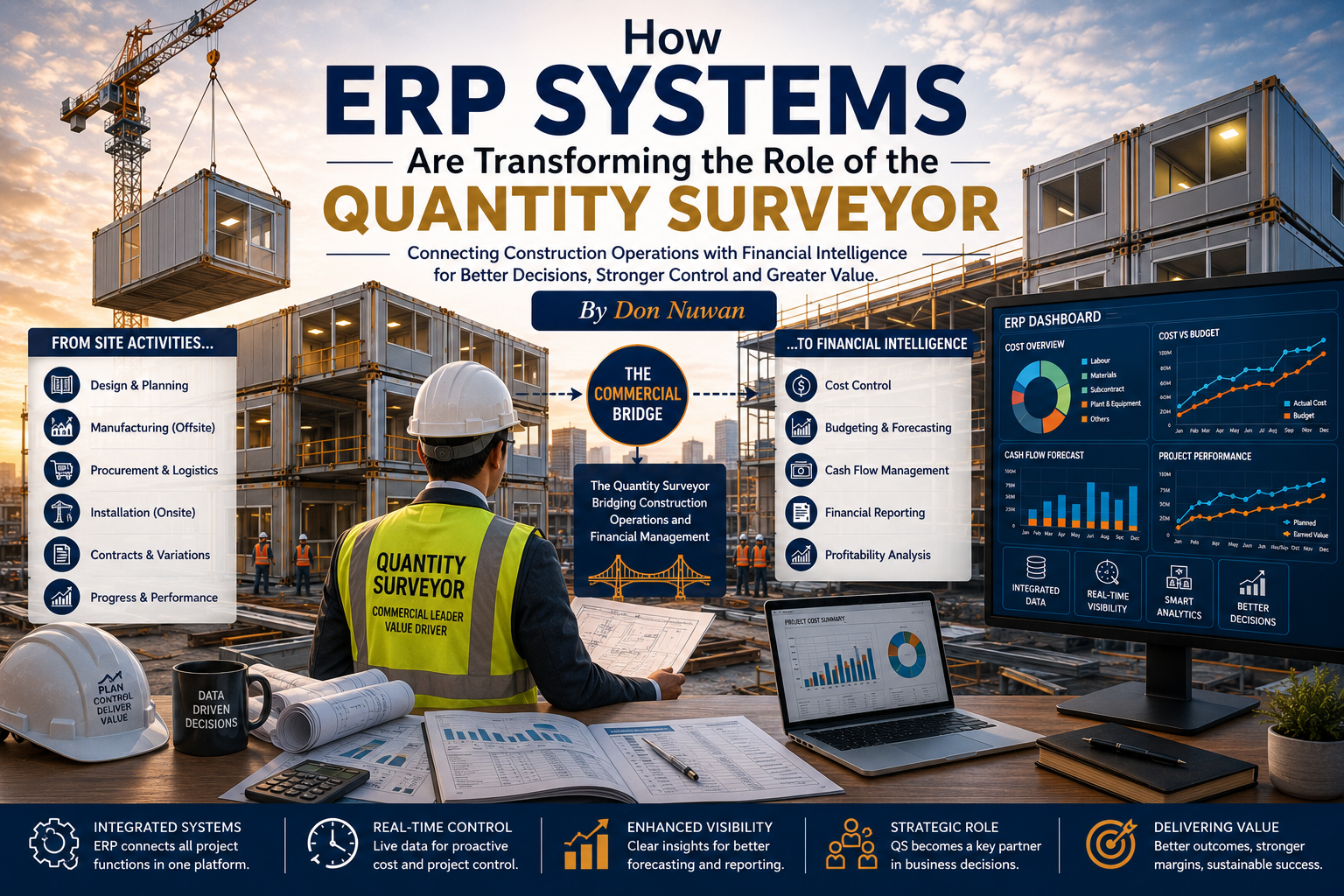
The role of the Quantity Surveyor is evolving rapidly beyond traditional measurement and contract administration. This article explores how ERP systems are transforming modern construction by connecting cost control, procurement, finance, and real-time project data, positioning the Quantity Surveyor as a strategic commercial professional at the centre of construction decision-making.
PO vs LOA vs Contract: Choosing the Right Commercial Instrument in Construction Projects
Published: March 2026
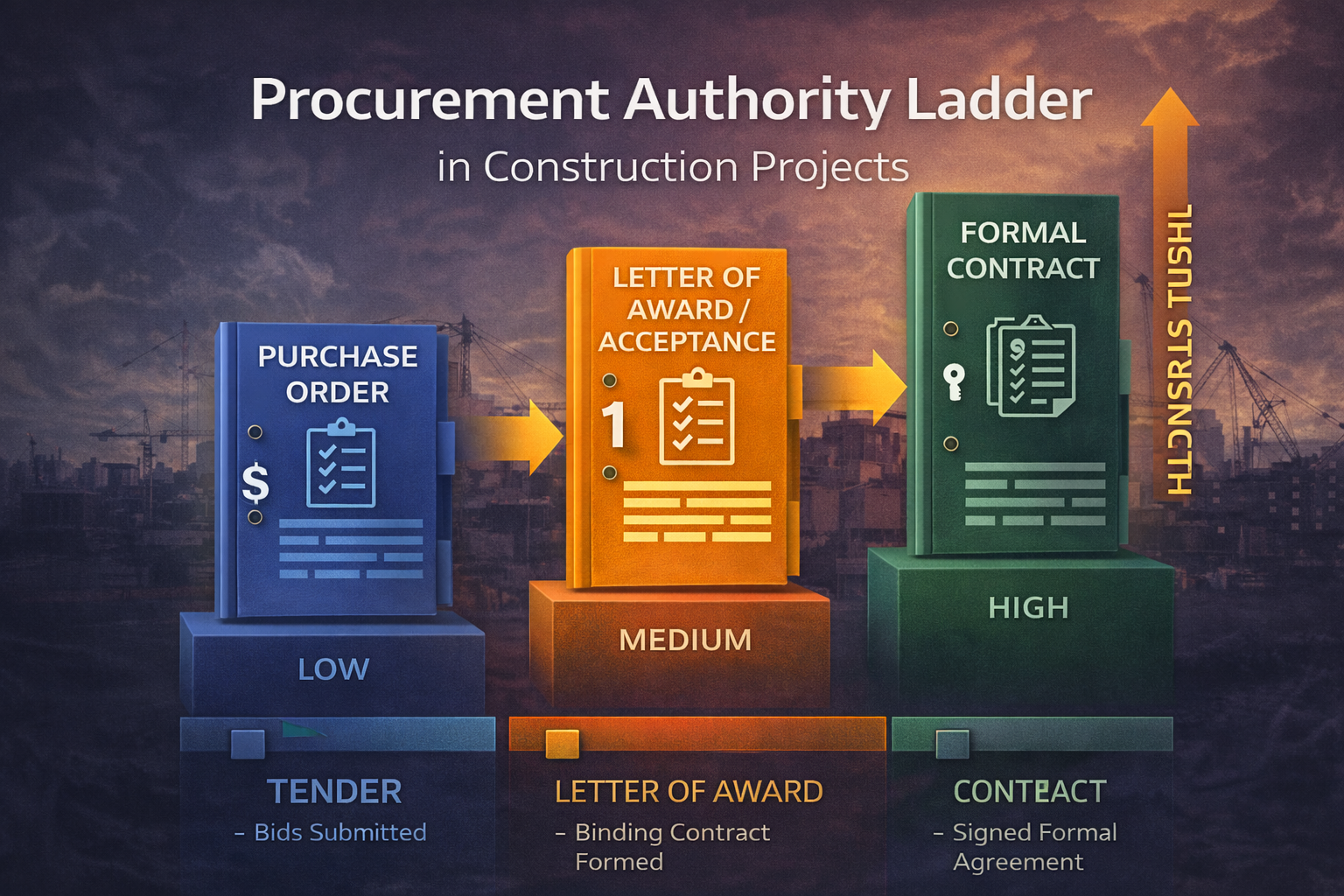
PO, LOA, and formal contracts may all create legal obligations, but they do not provide the same level of commercial control. This article explains when each instrument should be used in construction procurement and highlights the important distinction between FIDIC’s Letter of Acceptance and the commonly used Letter of Award.
Exploring Software Solutions as a Quantity Surveyor – Why Early Feasibility Tools Matter
Published: Feb 2026
In this article, I break down how modern tools can help Quantity Surveyors provide early-stage strategic value, especially in modular construction projects. Get a glimpse into the app I'm building to support feasibility, ROI, and client presentations.
Why New Zealand’s Construction Industry Is Shifting to Modern Methods of Construction (MMC)
Published: January 2026
New Zealand’s construction sector is under pressure from rising costs, labour shortages, and programme uncertainty. In this article, I explain why developers are shifting toward Modern Methods of Construction (MMC), how modular delivery improves programme and cost certainty, and why engaging experienced modular professionals is critical to project success.
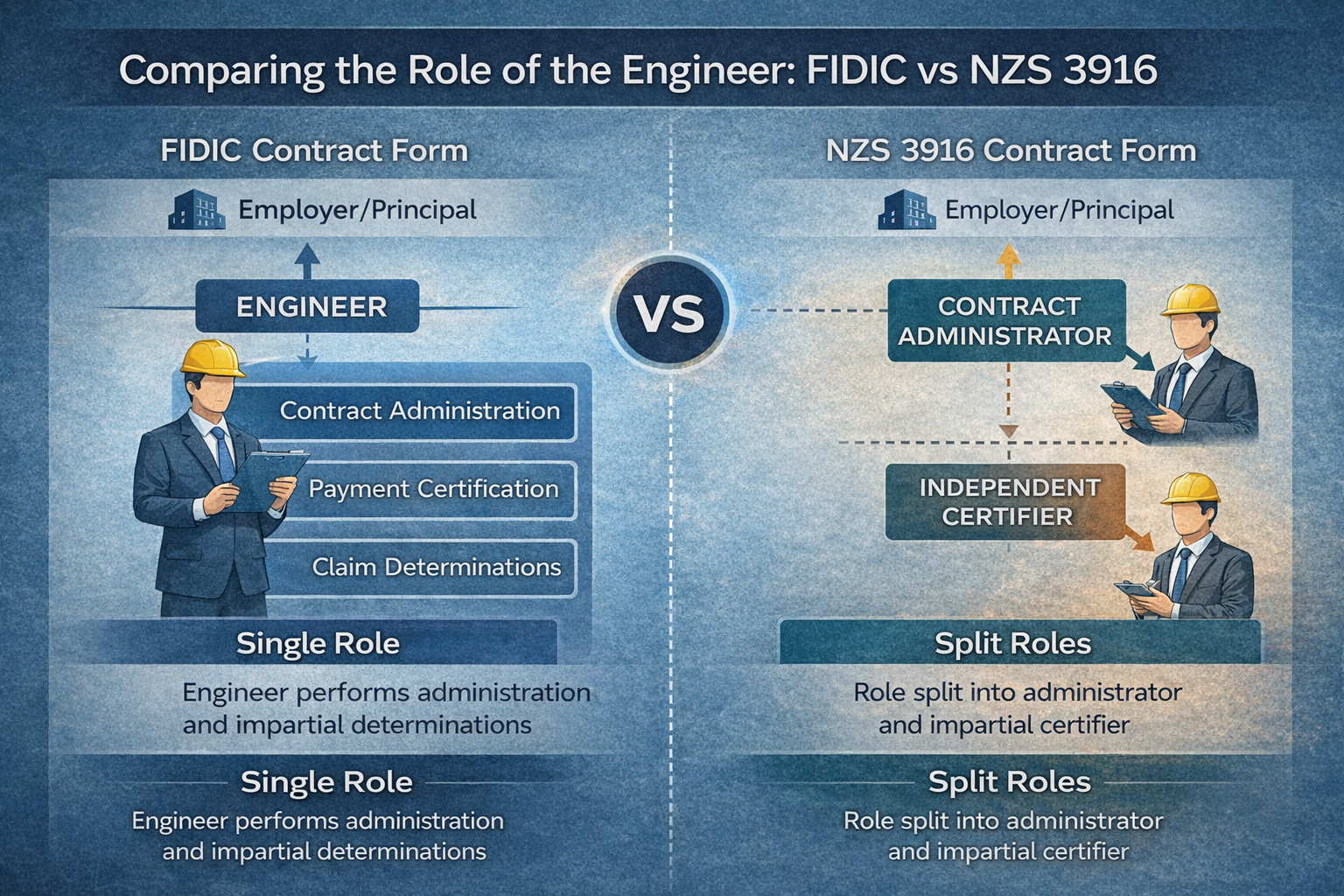
The governance structure of construction contracts can determine whether projects remain commercially stable or move toward disputes.
This article explains the Engineer’s role in FIDIC contracts and compares it with the evolving governance model under NZS 3916,
including the emerging split between Contract Administrator and Independent Certifier.
Using Gibbs’ Reflective Cycle in Construction Cost Control
Published: November 2025
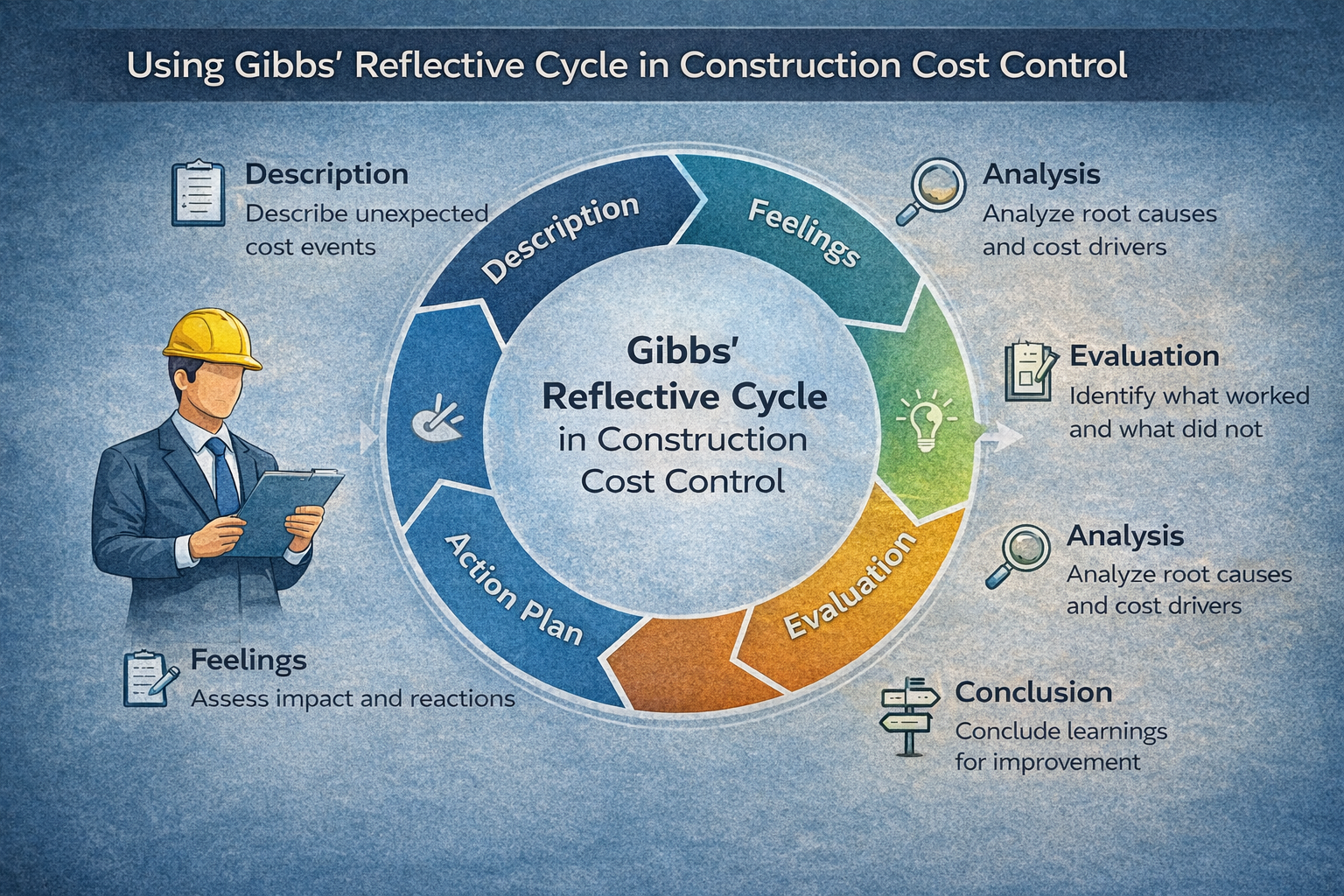
Cost control is not only about tracking numbers — it is also about learning from project decisions.
This article explains how Gibbs’ Reflective Cycle can be applied to construction cost control to
identify root causes of cost deviations and continuously improve commercial decision-making.
How I Used Variation Analysis to Protect Project Profit Margins
Published: October 2025
Variation analysis isn’t just paperwork — it’s a strategy. In this article, I share how tracking and categorizing variations proactively helped our team preserve project margins across modular delivery in New Zealand.
Why Strategic Cost Control Is Critical from Day One
Published: September 2025
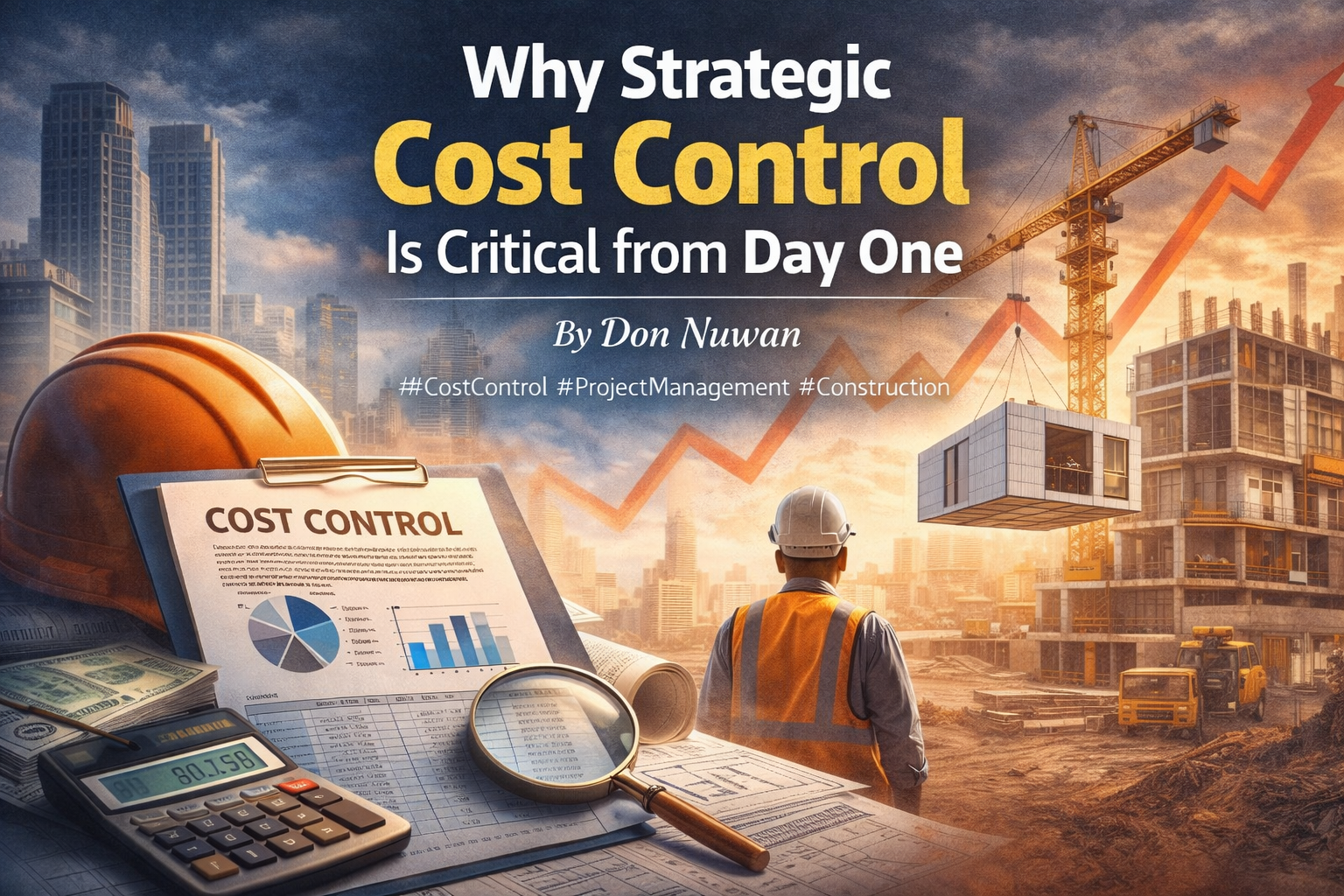
Cost control isn't just a reporting function — it's a strategic tool that must start from concept design. Learn how early QS involvement can improve budget certainty, reduce rework, and deliver real value.
Practical Challenges of Implementing NZS 3916 in Modular Projects
Published: August 2025
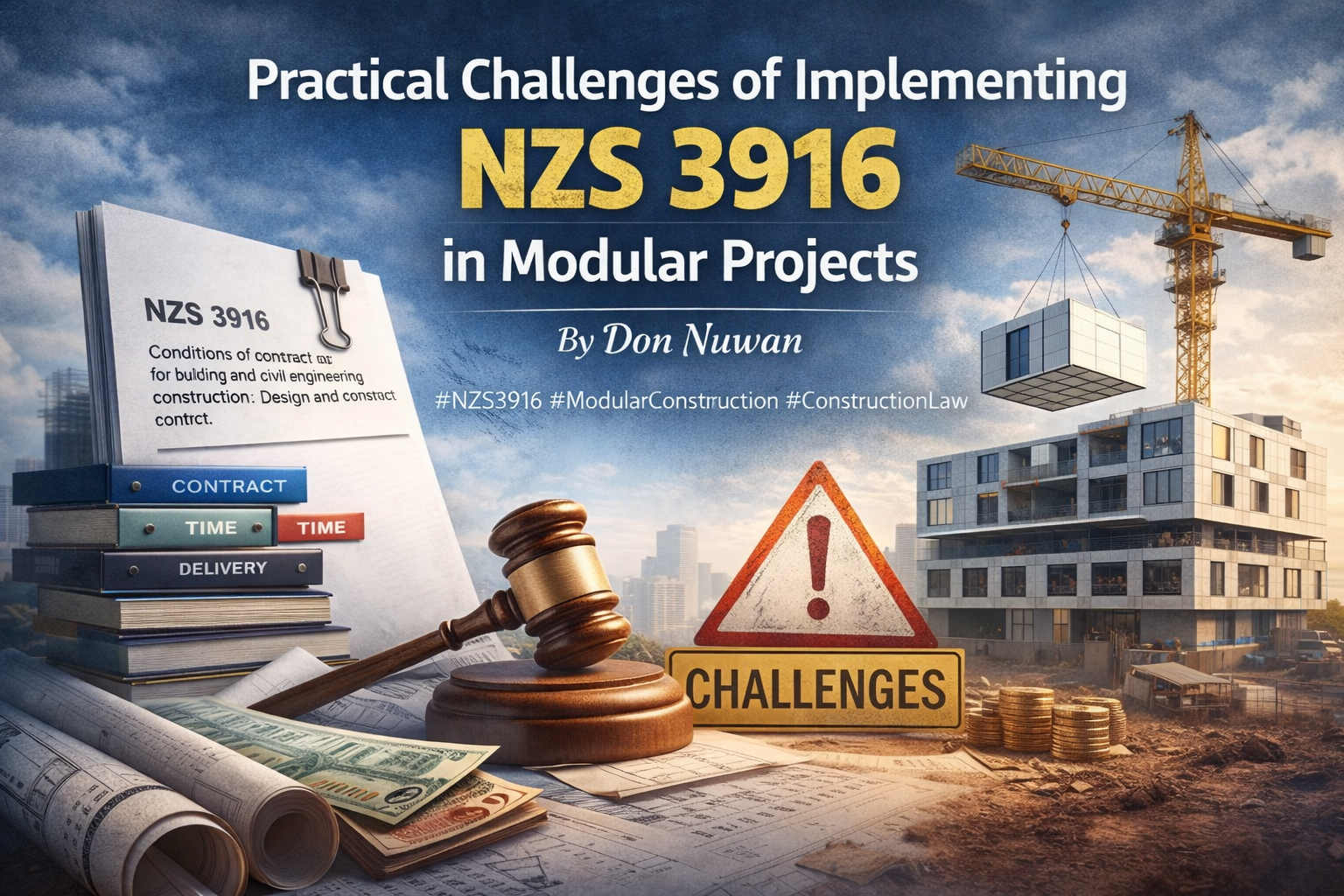
NZS 3916 is widely used in New Zealand for Design & Build contracts. But when applied to modular projects, it presents unique legal, coordination, and practical risks. This article explores how to adapt the framework to match the modular reality.
Modular vs Traditional: Where Does the Real Cost Advantage Lie?
Published: July 2025
Explore the true cost differences between modular and traditional construction methods, based on real-world experience across Australia, New Zealand, and Vietnam. Discover when modular works — and when it doesn’t.
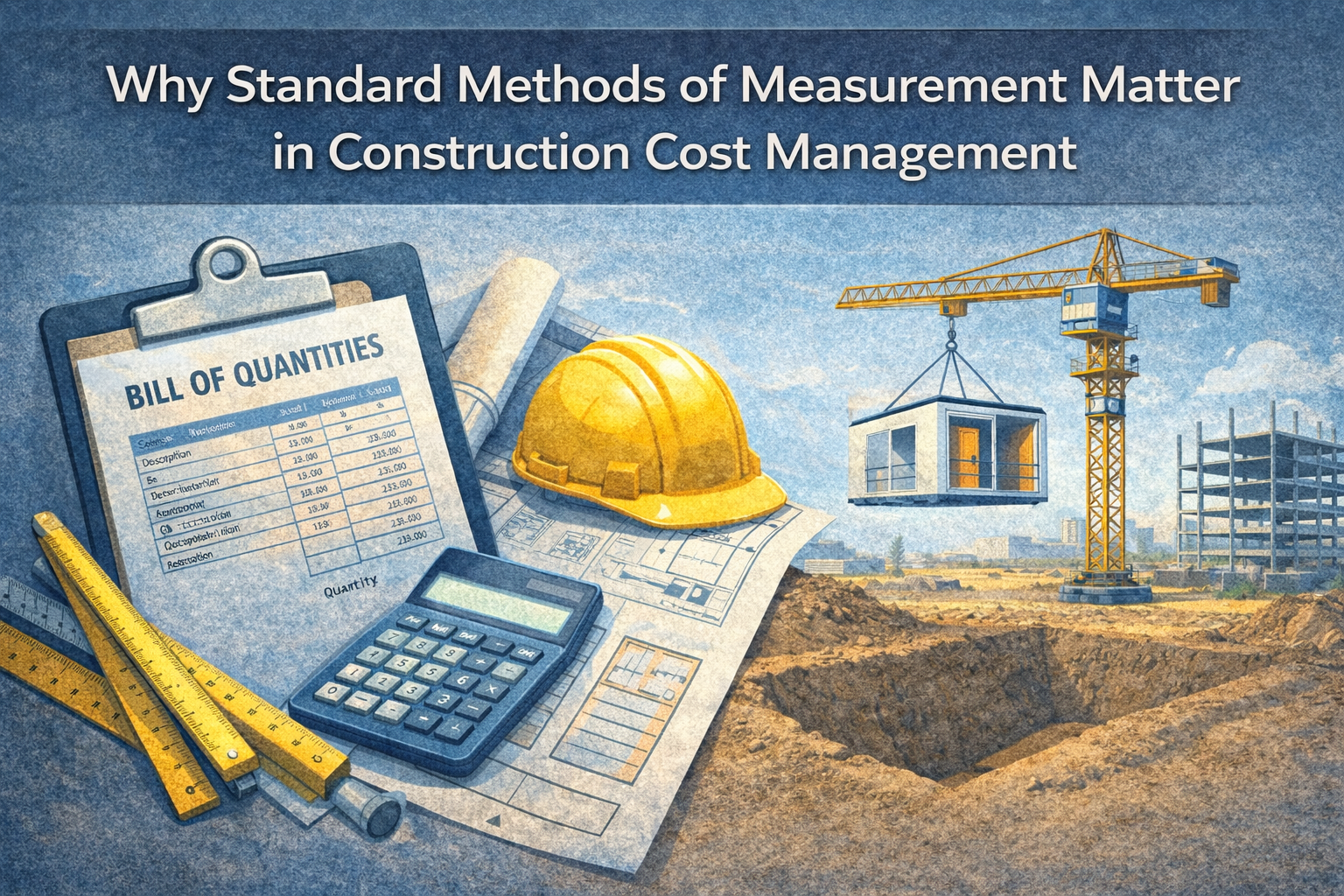
Why Standard Methods of Measurement Matter in Construction Cost Management
Published: June 2025
Standard Methods of Measurement create clarity in construction pricing by defining how quantities are measured and how risk is allocated in contractor rates.
This article explains why measurement standards such as NRM 2 are critical for fair tender comparison, risk allocation, and dispute prevention in modern construction projects.
Modular construction can accelerate delivery, but it also shifts project expenditure forward and distorts the traditional S-curve.
This article explains how front-loaded cashflow under modular delivery creates a different commercial risk profile compared with traditional construction.
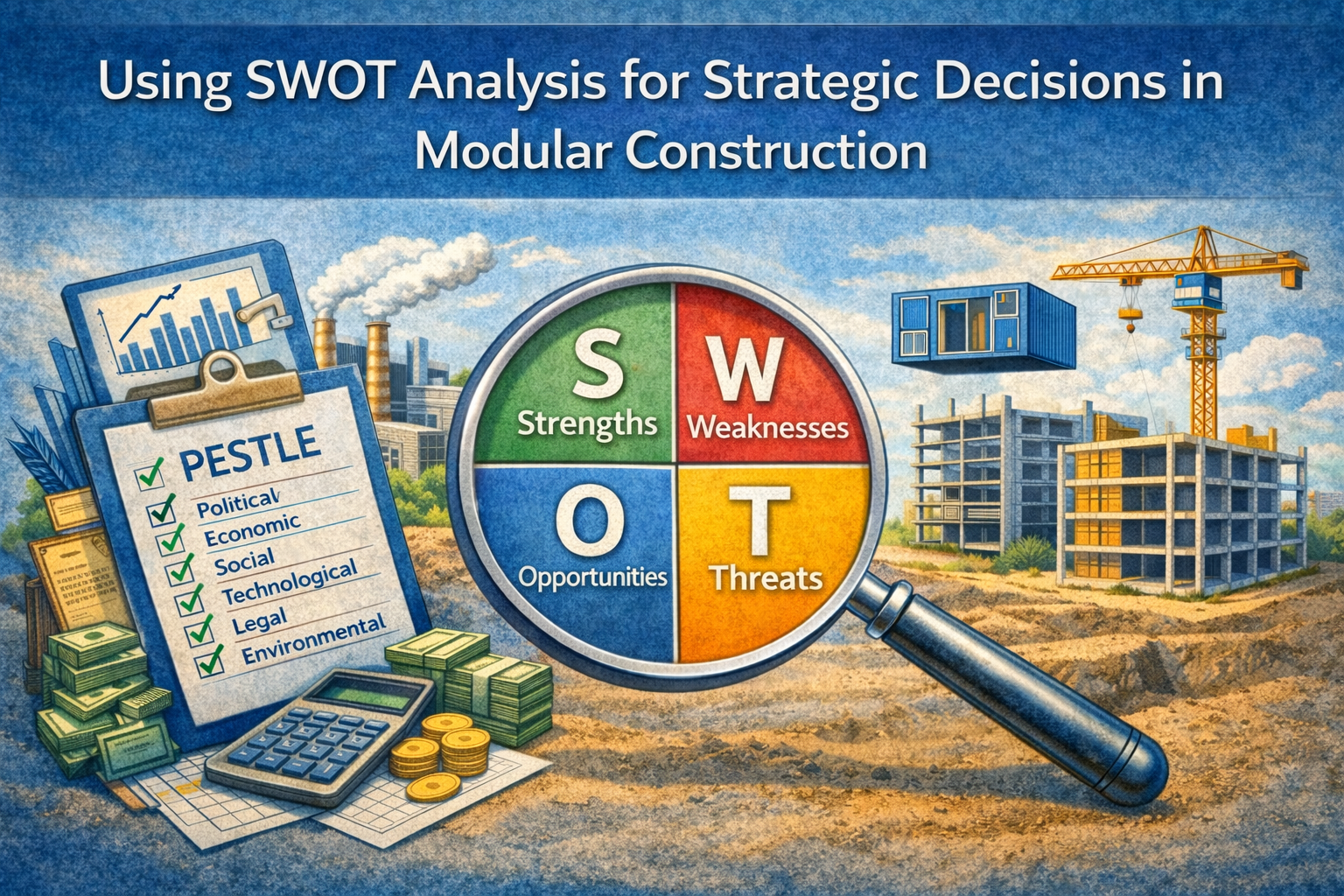
Using Strategic Analysis to Evaluate Panelized Systems in Modular Construction
Published: April 2025
When modular construction companies consider expanding into panelized systems, strategic evaluation becomes critical.
This article explains how tools such as SWOT, PESTLE, financial feasibility, and operational capability analysis help decision-makers assess market opportunities and manage risk when introducing new construction systems.