The Cashflow Shock of Modular Construction
Modern Methods of Construction (MMC), particularly volumetric modular systems, are increasingly used in major construction projects because of their speed, quality control, and factory-based efficiency. However, when modular construction is delivered under traditional contract frameworks such as NZS 3916 (Design & Build) in New Zealand or similar arrangements under FIDIC Design‑Build contracts, a major commercial challenge emerges the timing of project cashflow.
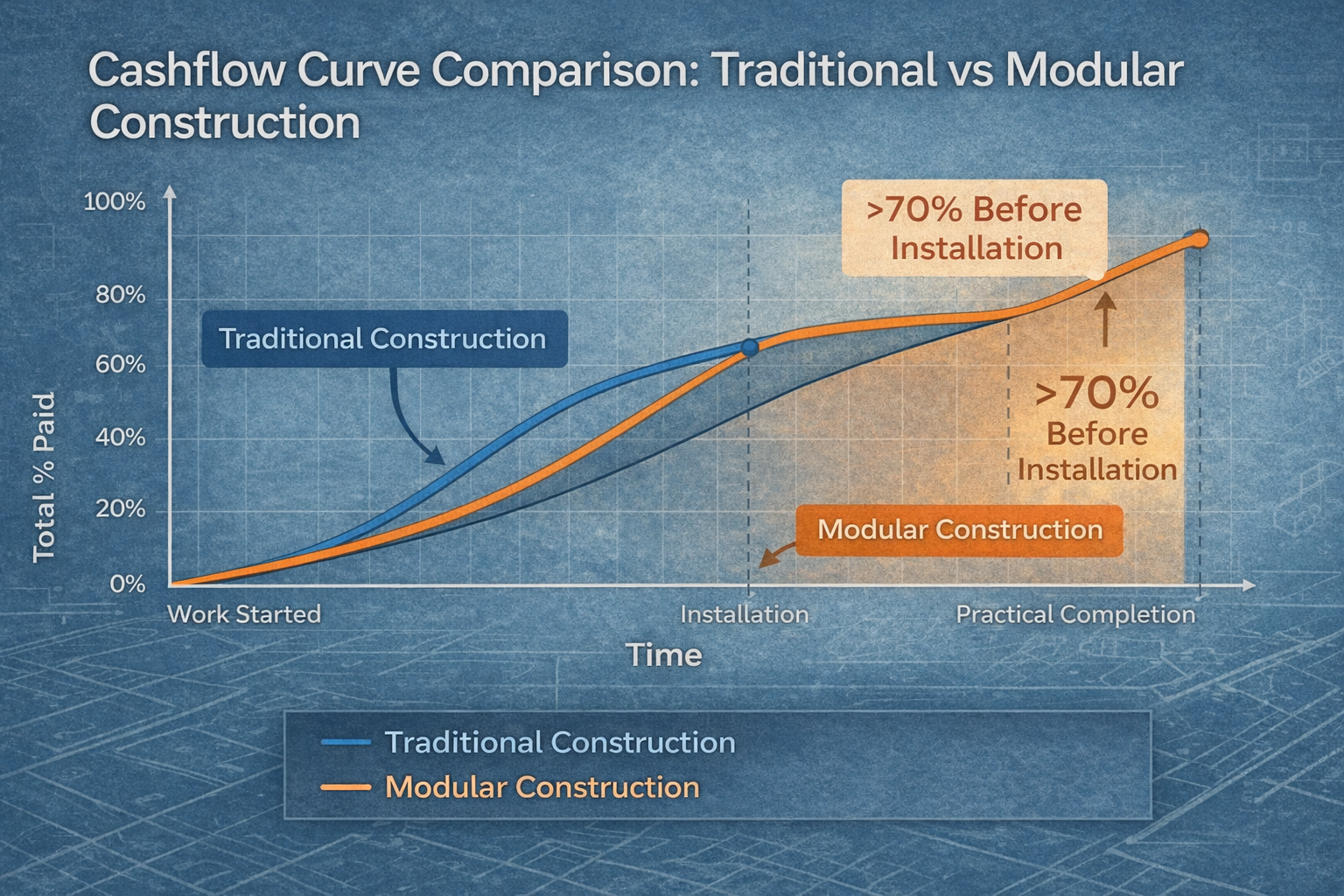
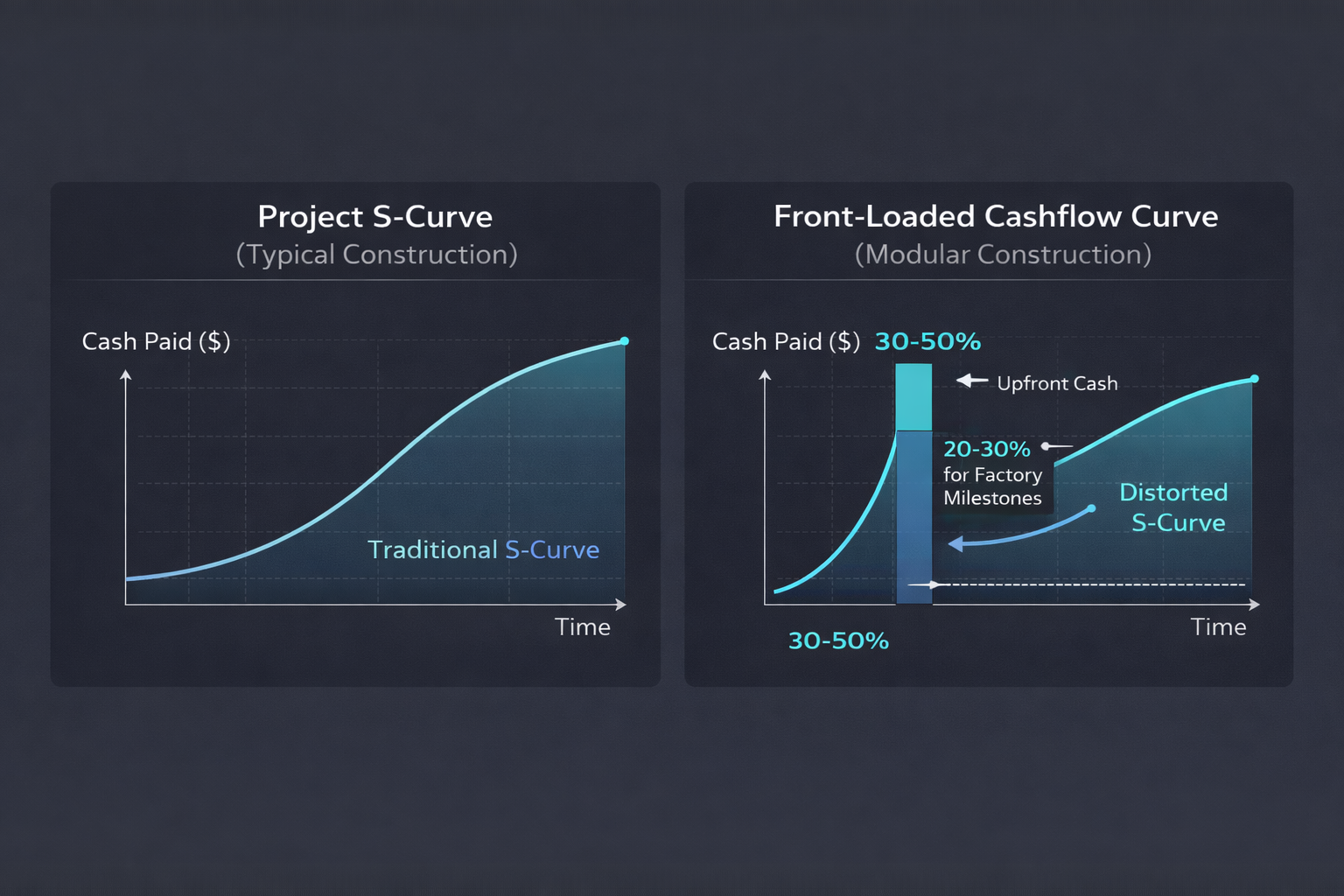
In construction project controls, cumulative project expenditure is usually represented using a project S‑curve. In traditional construction this S‑curve develops gradually as work progresses on site and payments are certified based on completed work.
Modular construction changes this behaviour significantly. Because a large portion of project value is manufactured in factories before delivery to site, the project S‑curve can become front‑loaded, with substantial expenditure occurring very early in the project lifecycle.
Modular delivery does not remove the S‑curve it distorts it by shifting a large portion of project expenditure to the beginning of the project.
Under traditional delivery, payments largely follow certified progress on site. Under modular delivery, significant payments may be required before modules arrive on site, and sometimes before the asset is even visible. For developers, lenders, and investors, this “cashflow inversion” becomes one of the most critical commercial risks to manage.
Why this matters to developers and investors
The real question is not simply whether modular construction is cheaper.
The real question is whether front‑loaded cashflow is properly secured, certified, and protected.
If 30–40% of a contract value is paid upfront to a manufacturing facility, the Principal may effectively be financing the factory. Without appropriate contractual protection, this exposes the project to insolvency risk, delivery risk, and cross‑border enforcement challenges.
Traditional cashflow logic (NZS 3916 context)
- Payments linked to certified work progress
- Valuations tied to completed works
- Gradual transfer of risk as work is incorporated
- Retention mechanisms protecting the Principal
Modular cashflow reality
- 30–40% advance payment to commence fabrication
- 20–30% during factory production stages
- Final balance prior to shipping or installation
Traditional vs Modular Cashflow Comparison
| Aspect | Traditional Construction | Modular Construction |
|---|---|---|
| Payment timing | Payments follow on‑site progress | Large payments required before delivery |
| S‑Curve behaviour | Typical gradual S‑curve aligned with site progress | Distorted S‑curve due to early manufacturing payments |
| Security position | Retentions and certification provide leverage | Higher early exposure if not secured |
| Title and insurance | Usually clearer once incorporated into works | Must be clearly defined during manufacturing and transport |
Strengthening contract structures for modular delivery
- Advance payment bonds
- Performance bonds or parent company guarantees
- Factory inspection and milestone certification
- Clear title transfer provisions
- Defined insurance responsibilities during manufacturing and shipping
Final thought
Modular construction is not difficult because of engineering complexity. The greater challenge is aligning cashflow structure and contractual risk allocation with the realities of factory manufacturing.
In modular delivery, the first risk is financial — not structural.